
Creatine: What the Research Actually Shows
Note: The use of the terms "women" and "men" in this article reflects how the research itself was conducted and reported. I recognize and support that gender exists on a spectrum and honor all gender identities.
Creatine has become one of the most talked-about supplements in wellness circles, and lately, the conversation has shifted specifically toward its benefits for women, particularly around perimenopause, menopause, and aging.
Creatine genuinely has one of the strongest safety profiles and longest research records of any supplement out there. But the way it's being marketed to women right now includes a bit more sparkle than the science supports. Here's what the evidence actually shows.
What Is Creatine?
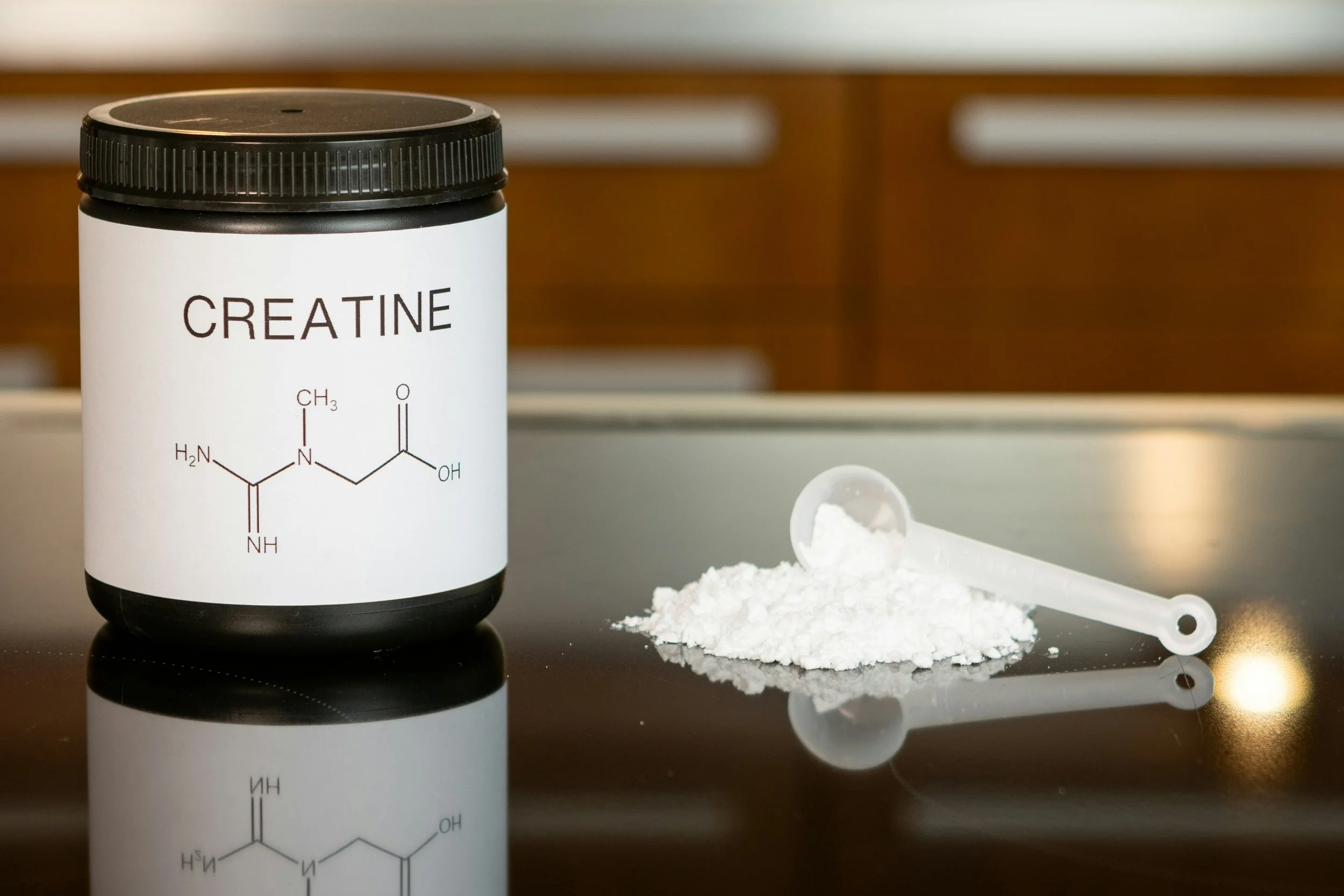
Creatine is a substance your body naturally produces in the liver, kidneys, and pancreas from three amino acids: arginine, glycine, and methionine. (You may remember from science class that amino acids are the building blocks of protein.) You also get creatine from food, primarily meat, fish, and dairy.
Its main job is to help muscles and other tissues access energy quickly, especially during short bursts of high-intensity activity like lifting weights, sprinting, or intense cognitive work.
Creatine supplementation has three well-established, historically researched benefits:
Improved high-intensity exercise performance: Creatine boosts phosphocreatine levels in muscles, helping regenerate ATP during bursts of effort and supporting strength, power, and sprinting.
Increased muscle recovery: Reducing muscle damage and fatigue with repeated training.
Increased lean muscle mass: Particularly when combined with resistance training.
These benefits are well supported, though most research has historically focused on younger men in athletic or military settings.
What the Research Says About Creatine for Women and Aging
The recent surge of creatine marketing toward women (particularly around bone and muscle health in perimenopause and menopause) deserves a closer look. It's genuinely encouraging to see research dollars invested in women's health - I’m always going to be supportive and a huge advocate of this!
Here’s the rub, though…the existing research shows that for women in perimenopause, menopause, and beyond, creatine is not a magic fix for bone or muscle health on its own. The data and story are nuanced.
Creatine Alone (Without Resistance Training)
Two randomized controlled trials (1, 2), each lasting 2 years, that used 3 g/day of creatine in postmenopausal women found no improvements in bone density, lean muscle mass, muscle strength, or physical function, even among women who engaged in regular aerobic activity. Without resistance training, creatine supplementation did not move the needle.
Creatine Combined With Resistance Training
Adding creatine to a resistance training program may provide a small additional benefit. One study found approximately 0.66 lbs of additional lean mass gained over two years compared with resistance training alone, along with modest improvements in walking speed (about 1.5 seconds over 0.05 miles). These are real (but modest) gains.
Importantly, these improvements have not been shown to meaningfully reduce sarcopenia (muscle loss), falls, or fractures. Claims that creatine supplementation alone protects against osteoporosis or sarcopenia are not yet supported by the evidence.
Resistance Training Alone: Still the Gold Standard
Resistance training on its own reliably improves muscle mass, strength, and functional ability. It remains the most evidence-supported intervention for bone and muscle health in aging, with or without creatine (1, 2).
Is Creatine Safe?
Yes,creatine monohydrate specifically has a strong safety profile. It is generally considered safe at recommended doses of 3–5 g/day. High doses up to 30 g/day have been studied in adults without evidence of harm, though side effects are more common at higher doses. There are other forms of creatine on the market, but creatine monohydrate is the only form with a robust safety record in the literature.
There has been lingering concern about creatine harming the kidneys; this is largely a myth. In healthy adults, studies show no kidney damage when creatine is taken at recommended doses. (1, 2).
The Bottom Line on Creatine
Creatine can be a supportive "sidekick" for people already doing resistance training who want to support their muscle and bone health, particularly through perimenopause and beyond. But it is not a replacement for exercise, and it's not the sparkly magic pill it's currently being marketed as.
If you're already doing resistance training and curious about experimenting with creatine, the evidence suggests it's safe and may offer a modest additional benefit - if the price tag fits your wallet. If you'd rather focus on food and movement alone, that's a completely valid and well-supported approach too.
Your strength journey is personal, and no powder or pill can replace the foundation of consistent, joyful movement.